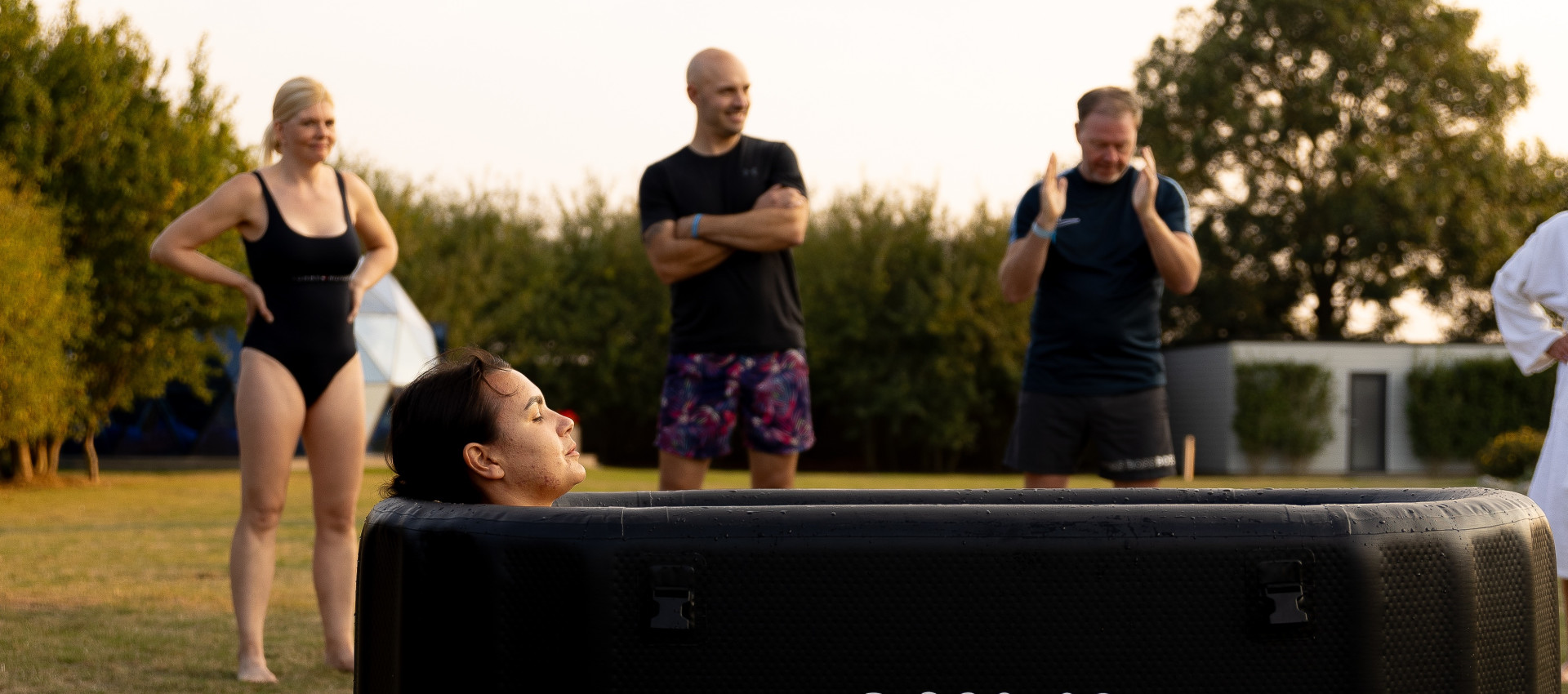
What is Cold Water Therapy?
Brrrr, are you going to take the plunge into cold water therapy? It’s becoming an increasingly popular part of overall wellness, but what actually is cold water therapy?
Cold‑water therapy is the practice of immersing the body in cold water, typically between 10–15°C, for short periods to stimulate circulation, reduce inflammation and support mental clarity. It’s a simple, natural wellbeing technique that uses controlled cold exposure to create positive physical and mental responses.
Well the word ‘cold’ does give it away… think icy baths, cold plunge pools, cold showers and cold open water swimming. But it’s more than just braving the chilly temperatures, it’s about the impact cold water exposure has on your physical and mental wellbeing.
When icy baths and cold showers are mentioned, we’re not talking for long periods of time. Cold water therapy involves exposing your body to cold water for short bursts, submerging the body in water below 14.4°C. The sudden drop in temperature triggers a range of responses such as increased heart rate, faster breathing and the constriction of blood vessels (vasoconstriction).
It’s when the body starts to warm up again that the magic happens. Circulation improves as blood vessels widen, helping support muscle recovery and reducing inflammation.
Here you will learn more about the cold water therapy – keep reading for more about the benefits of cold water therapy, the science behind it and how to stay safe whilst embracing the icy conditions.
Cold water therapy definition: Cold‑water therapy is a wellbeing practice that involves immersing the body in cold water - usually between 10–15°C - to stimulate circulation, reduce inflammation and support mental clarity.
Benefits of Cold‑Water Therapy
You wouldn’t think plunging into icy cold water could provide any benefits other than raising goosebumps, but you’ll be pleased to hear that there are actually many benefits of cold water therapy. Here’s the lowdown:
1. Speeds up muscle recovery: Cold water can help reduce soreness and inflammation after exercise, making it a favourite for athletes.
2. Boosts circulation: The cold causes blood vessels to constrict. When your body warms up afterwards your blood flow improves, helping deliver oxygen and nutrients around the body.
3. Enhances mood and alertness: Cold exposure triggers the release of endorphins and adrenaline, giving you a natural energy and mood lift.
4. Builds mental resilience: Stepping into cold water takes focus and controlled breathing, helping you develop stress tolerance and mental toughness.
5. Supports immune and metabolic function: Regular exposure may stimulate the immune system and boost metabolism.
6. Promotes overall wellness: Combining physical and mental benefits, cold water therapy can complement a holistic wellness routine.
Cold water therapy is becoming an important part of many wellness routines. Looking to take your wellness routines to the next level? There are a number of wellness retreats offering guided cold exposure, which is the safest and most effective way to start if you’re dipping your toes into the world of cold water therapy.
What is the science & evidence behind cold water therapy?
So we know the benefits that cold water therapy can bring but what’s the science behind it?
1. Inflammation and muscle recovery
Many novice and professional athletes swear by icy baths for its therapeutic benefits, particularly after exercise. The intense cold causes vasoconstriction (when the blood vessels narrow) and in return reduces fluid build-up and inflammation in the muscles. When the body begins to warm back up, reperfusion increases blood flow.
Research shows that cold water therapy can reduce delayed onset muscle soreness (DOMS) after intense exercise and for best results its benefits are strongest when used within 30-60 minutes after exercise. It’s shown to be particularly good for recovery between competitions.
2. Nervous system activation
It seems plunging into neck-deep cold water can intensely stimulate the sympathetic nervous system. So how does it do this? The extreme exposure to cold water triggers rapid breathing and increased heart rate along with a large release of norepinephrine, with some studies showing an increase of 200-500%. Subsequently it means a heightened alertness, an improved mood and a spring in your step!
3. Mood, stress, and mental health
Not only is cold water therapy considered a solution for soothing muscles, but there is growing research into its psychological benefits too. When you take a cold water dip, it activates the cold receptors linked to brainstem mood circuits and releases endorphins (the happy chemical).
Small studies have shown that cold water therapy can assist in relieving stress, improve mild depression and increase your overall wellbeing. It is important to note at this stage that research is fairly minimum and further quality clinical trials are required.
4. Immune system effects
So evidence is mixed when it comes to the effect of cold water therapy on the immune system. Some studies show that there is an increase in circulating immune cells after cold exposure and a recent observational study on winter swimmers suggested that there were fewer self-reported illnesses but the correlation is unknown.
6. Cardiovascular effects
Cold immersion causes a strong cardiovascular stress response which can improve risk factors for cardiovascular disease, such as blood pressure and cholesterol levels.
Immediate effects of cold water therapy include rapid breathing, increased blood pressure and heart rate spike.
It’s important to note, as advised from Bupa, that the evidence on cold water therapy is relatively scarce with there being limited scientific based evidence to support the claims.
Those who have underlying heath conditions relating to your heart or asthma are recommended to contact a GP before considering entering into icy waters.
You can experience cold‑water therapy safely and naturally in our natural swimming pond, surrounded by peaceful Essex countryside.
How cold and for how long should you be cold plunging for?
If you’re thinking of testing the waters into cold water therapy it’s recommended to start off in small, short bursts and gradually decrease the temperature.
Studies generally place the optimal cold plunge temperature between 10–15°C. However, as a beginner it is recommended that you begin around 15–18°C, and gradually reduce the temperature as you begin to build tolerance.
If you’re new to cold plunging, 1–5 minutes in the water is considered enough time. For post-workout recovery, athletes often stay in the water for 5–15 minutes to help reduce soreness and support their recovery.
Sessions longer than 15 minutes aren’t recommended as this is where the risk of hypothermia creeps in. If you’re experiencing uncontrollable shivering and slurred speech you should stop immediately and seek medical advice.
The Different Methods of Cold Water Therapy
Cold water therapy comes in various forms, each offering different levels of intensity. It depends on your goals and what you want to achieve but here are the most popular options:
1. Cold Showers
The cold shower is the most accessible and beginner-friendly form of cold water therapy. Start off slow and gradually reduce the temperature of the water and increase your time under the cold spray of the shower.
You know your body’s limits so in the event you’re feeling uncomfortable, gradually increase the temperature back up, head for a warm drink and try again another time. There’s no rush in getting it right so take your time.
2. Ice Baths / Plunge Pools
Ice baths are another popular form of cold water therapy. Generally ice baths are used for those looking for more intense and controlled cold exposure, particularly for athletes looking to reduce muscle inflammation.
If you’re a beginner you can try start off with a cool bath at home, around 15°C for 1-2 minutes and slowly build the time to 5-10 minutes.
Alternatively, many wellness centres and spas offer cold water immersion sessions, often with trained instructors to guide you safely through your first experience. Wellness breaks are an ideal way to explore cold therapy, enjoy other relaxation treatments and connect with like-minded people.
3. Natural Cold Water Immersion
Open water swimming is a great way of getting your cold water fix while enjoying the beauty of the outdoors. There are many dedicated open water swimming locations, from rivers and lakes to the open ocean.
Generally open water dips are for more experienced cold water users who know their limits and can manage their risks.
If you’re thinking of dipping your toes into open water swimming, it’s recommended you find an organised group first and never swim alone. Begin with swimming in the Summer months when the water is a little warmer and build up the time you spend in the water.
Tips Post Cold Water Therapy:
- Have a buddy so you can help each other out in the event of an emergency
- Have towels at the ready for when you exit the water
- Warm up gradually by drying yourself and dressing in warm layers – take a hat!
- Have a warm drink at the ready
- Have something to eat
- Don’t have a warm bath or shower as the sudden change in temperature can send your body into stress, so just warm up naturally
What time should you do Cold Water Therapy?
Generally, cold water therapy can be beneficial at any time of the day but it depends on your goals and your lifestyle. It brings various benefits depending on the time of the day:
1. Morning Time – Wakey Wakey
A cold bath or shower provides the perfect wake up call and helps boost your energy and mood. The sudden hit of norepinephrine and adrenaline will help you feel more energised and focused, ready to take on the day. Remember, beginners need to start off slow (30 seconds) and gradually increase the time spent in a cold shower or bath.
Often open water swimming is preferred in the morning too, not only are the areas generally quieter for swimming, it offers the same benefit of alertness that a morning cold shower or bath have.
2. Evening – Time to Rest
Having a cold water boost in the evening helps to reduce the stress of the day and promotes relaxation to enable a better night’s sleep.
3. Post-Workout – Repair Those Muscles
A cold water dip after a workout is popular as it helps to relieve muscle soreness, reduce inflammation and speed up recovery. It’s particularly good for those who have completed intense workouts.
Many guests choose to pair their cold‑water dip with time in our Finnish sauna, creating a soothing hot‑cold contrast that supports circulation and relaxation.
How to Practise Cold‑Water Therapy Safely
Safety is paramount when it comes to practising cold water therapy. If you’re new to the notion of cold water therapy, you need to make sure you’re adhering to safety advice.
Seek Medical Advice
Begin by listening to your body and knowing your limits. If you have an underlying condition (such as heart problems, asthma, fainting episodes) then you should reach out to your local GP to ask for advice before taking the cold water plunge.
Know your limits… if cold water therapy is new to you, then start off slow and begin with cool water and gradually decrease the temperature over the course of a few weeks.
Preparation
Before entering the water it’s encouraged you warm up slightly (gentle exercise, stretches). If you’re swimming in cold water, a swim cap and gloves are recommended along with a swim buddy in case one of you gets into difficulty; plus don’t forget to check swimming/weather conditions in your area.
Upon exiting the water, ensure you have a couple of towels, a changing robe and lots of warm clothes to layer up – a hat is recommended too. A warm drink is also advised but don’t be jumping into hot tubs or having hot showers as this can impact your body and send it into stress.
Check out Warning Signs
Ensure that you know the warning signs before entering into the world of cold water therapy, here are the top 3 to look out for:-
- Hypothermia: When you’re uncontrollably shivering, confused, speech is slurred and you lose coordination
- Cold Shock: When you’re gasping, have a rapid heart rate, hyperventilating or feeling dizzy
- Frostbite: Usually this is in extreme coldness but you will be feeling numb, pale and have waxy skin.
The Key Takeaway on Cold‑Water Therapy
Cold‑water therapy is a simple, natural way to support circulation, boost mood and reconnect with your body. At Glass House Wellness Retreat & Spa, our natural swimming pond offers a peaceful, safe space to experience the benefits for yourself.

Cold‑Water Therapy at Glass House Wellness Retreat & Spa
Interested in taking the plunge into cold water therapy but don’t yet have the confidence? Our natural swimming pond, sauna and spa facilities offer a calm, supportive environment to explore cold‑water therapy as part of a wider wellbeing journey.
Our retreats offer a great way of easing you into the practice of cold water therapy and are often guided by trained instructors who introduce the practice gradually in an environment where you feel safe. It also provides a chance for you to meet new like-minded people who are also interested in wellness routines to help the body and mind.
Take the first step in your cold water therapy journey, and explore our stays at Glass House Wellness Retreat & Spa.